
Student Behavior Masterclass.
A human-centered approach to classroom management. A free 60-minute workshop for educators.
Sound familiar?
Do you know the student who takes more of your energy than you wish they did?
The student who calls out constantly. Who shuts down when you redirect them. Who explodes over something that seems small. Who gets sent out of class, comes back the next day, and the cycle starts all over again.
At every grade level
Different ages. Different behaviors. The same drain on you.
Primary
“When they get overwhelmed, they hit, yell, or throw things.”
Middle
“They're sent out of class almost every week.”
Secondary
“They challenge almost everything I ask them to do.”
You're not alone
Behavior is the hardest part of the job.
RAND State of the American Teacher Survey, 2024 · Pew Research Center survey of 2,531 U.S. public K–12 teachers, 2024.
Why it keeps happening
Ever feel stuck in this cycle?
- Behavior
- Redirect
- Consequence
- Return
- Repeat
Something happens. You redirect. It happens again. Maybe there's a consequence. Maybe the student leaves the room. Eventually, they return. And tomorrow, you're having the same interaction all over again.
None of these responses are wrong. Students need clear boundaries, and consequences have a place. But if the same behavior keeps taking this much of your energy, something underneath it isn't changing.
Look beneath the behavior
Behavior is what we see. What drives it sits below the surface.
What we see
- Hitting
- Yelling
- Defiance
- Disruption
- Walking out
- Refusal
What may be underneath
- Stress and dysregulation
- Fear or lack of safety
- Frustration or shame
- Unmet needs
- Ruptured trust
- Disconnection
- Lack of belonging
So the question changes from “How do I stop this behavior?” to “What might be driving it, and what could help it happen less?”
We can't control our students. We can change the conditions around their behavior.
The framework you'll practice
Regulate first. Then relate. Then reconnect.
Three steps, in order, for the hard moments you're already handling.
“Help me feel regulated.”
Regulate
Help students return to a state where they can respond, using practical regulation strategies and the power of co-regulation. Regulation comes before redirection.
“Help me feel safe with you.”
Relate
Address behavior with empathy and care, while still holding the boundaries your classroom needs. When things go wrong, repair the relationship.
“Help me know I have a place here.”
Reconnect
Intentionally restore connection after a challenge, so difficult moments don't become the whole relationship.
Thursday, Oct 15 · 7pm ET / 4pm PT · 60 minutes.
In the 60 minutes
Leave with strategies you can use the next day.
- Picture one studentThe one whose behavior takes the most of your energy.
- Look beneath the behaviorWhat may be driving it, and what could help it happen less.
- Practice the frameworkRegulate, relate, and reconnect, with simple strategies for each.
- Pick your move for tomorrowChoose one strategy to try with that student.
This isn't about adding more to your plate. It's about making the hard moments a little easier, so you can spend less energy managing behavior and more time teaching, connecting, and helping students learn.
Who it's for
For everyone who works with students.
 PreK–12 teachers
 Special education teachers
 Counselors and school staff
 School and district leaders
Your facilitators
Led by Breathe for Change's founder and faculty.

Ilana Nankin, Ph.D.Founder & Co-CEO · Former public school teacher · Ph.D. in Curriculum and Instruction
Ilana taught in public schools before earning her Ph.D. Her research connects how teachers feel with how students learn.

Sam Levine, M.A.Faculty, Psychology and Leadership · Former ESL and middle school science teacher
Sam taught ESL and middle school science before joining Breathe for Change's faculty in psychology and leadership.
The people behind Breathe for Change
A community of 20,000+ educators
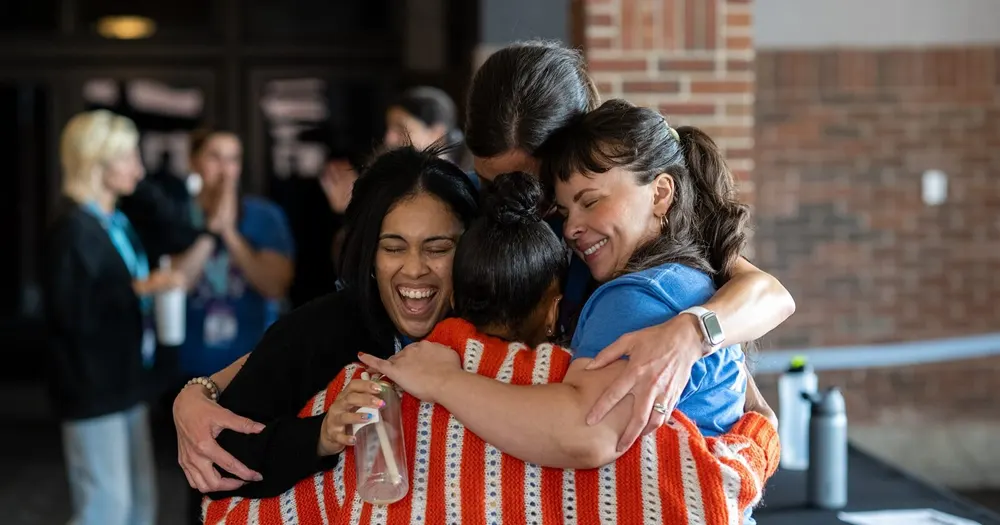
Breathe for Change educators
Kristy HerreraKindergarten Teacher
"If students don't feel safe, secure, and loved… the instruction is much harder to land."
Christi HussStaff Development Director
"I faced a lot of dysregulation personally and among my students."
Matt GrenierP.E. Teacher
"There isn't a day that goes by that I don't teach something I learned."
Jackie BroomfieldSchool Counselor
"Breathe For Change helped me reconnect with who I truly am and give back in ways I never imagined."
Elana EvansSpecial Education Teacher
"Before, I would not stop long enough to breathe and understand all perspectives. Now, I do and I am less stressed."
Breathe for Change graduates, in their own words.
Before you register
Questions teachers ask
How much does it cost?
It's free.
Where is it?
Online, on Zoom. Your link comes by email after you register.
How long is it?
60 minutes, Thursday, Oct 15 at 7pm ET / 4pm PT.
Who is this workshop for?
PreK–12 teachers, special education teachers, counselors and school staff, and school and district leaders.
Do I need special equipment?
No special equipment or previous experience is required.
Save your free seat for Thursday, Oct 15
One hour at 7pm ET / 4pm PT. Leave with a strategy to try with your student the next day.
Save my free seat